





Design Principles of Precast Beam Yard
Warm Tip: If you want to know more information, like quotation, products, cases, etc., please Click here, and contact us online.
In bridge engineering construction, the prefabricated beam yard serves as a critical "hub" for T-beam prefabrication and erection, and its design quality directly affects the overall efficiency, cost, and safety of the project. To ensure the orderly implementation of prefabricated beam production and transportation, multiple dimensions must be comprehensively considered, and a series of core principles must be followed during the design phase of the prefabricated beam yard.
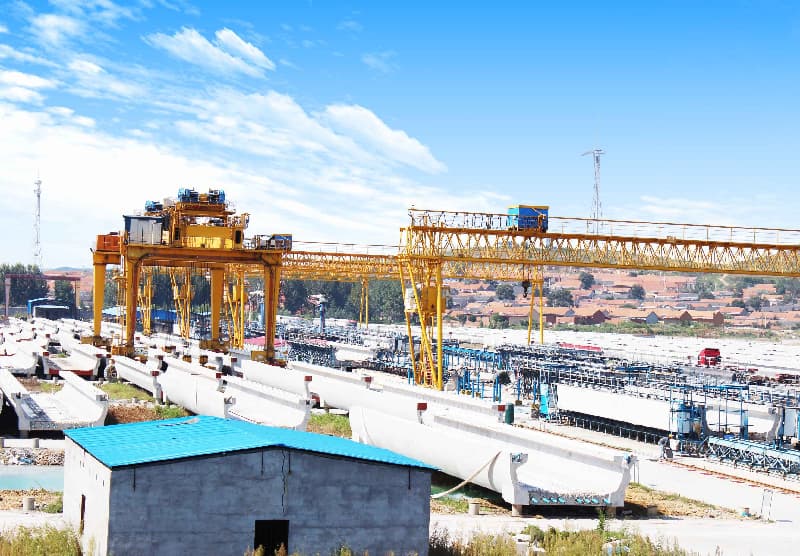
1.1 Engineering Construction Schedule
T-beam prefabrication and erection are vital construction processes in bridge engineering. During construction, it is necessary to reasonably grasp the project schedule requirements, engineering characteristics, site conditions, and finished beam transportation conditions. Based on these factors, a construction plan for T-beam production and erection should be formulated. Through scientific scheduling, the production capacity of the beam yard can be enhanced.
1.2 Construction Investment Costs
The design of the prefabricated beam yard should start from the construction perspective and, without affecting the construction schedule, strive to reduce project construction costs as much as possible. The main factors influencing the construction costs of the prefabricated beam yard include site construction, transportation of construction raw materials, transportation of cast concrete, and transportation of finished beams.
1.3 Intra-yard Transportation Distance
For the intra-yard layout of the prefabricated beam yard, areas such as the steel processing area, beam fabrication area, beam storage area, and office-living area should be reasonably divided. Meanwhile, the convenience of material distribution and the rationality of beam exit passageway) settings should be considered. Ensuring independent operations of each zone and minimizing mutual interference between zones are fundamental guarantees for the normal production of prefabricated beams.
1.4 Safety Factors
The prefabricated beam yard should reasonably plan the location of each zone to minimize the impact of processes between zones. The foundation of lifting equipment tracks and beam supports must undergo bearing capacity verification. Circuits and waterways should preferably be arranged around the site, and embedded conduits can be planned for on-site equipment to ensure the safe, tidy, and orderly arrangement of electrical circuits.
1.5 Space Factors
During the construction of the prefabricated site, the site space should be reasonably utilized according to work requirements. Therefore, while completing the site layout reasonably, fine-grained management should be adopted to shorten the construction flow between processes as much as possible, improve the output of prefabricated beams, plan the optimal beam transportation route, and timely complete the construction of substructures to provide a guarantee for prefabricated beam erection.
To Wrap Up
The design of a prefabricated beam yard is a systematic and comprehensive project, with each design principle interrelated and mutually influenced. Only by comprehensively considering factors such as engineering construction schedule, construction investment costs, intra-yard transportation distance, safety, and space, and through comprehensive planning and scientific layout, can an efficient, economical, and safe prefabricated beam yard be created, laying a solid foundation for the smooth progress of the bridge project and ensuring the successful realization of project quality and schedule goals.
Next: It is already the last case.
至天水高速公路渭河特大桥 653吨 (5).jpg "Weihe River Bridge Form Traveler Project")
.jpg "Panzhou-Xingyi Railway Xiangshuizhen Mega Bridge")
.jpg "Great Wall-Crossing Mega Bridge of the Yinchuan-Bayanhot Railway")
.jpg "Standardized hanging basket")


 Consult
 Message
